Meet the Alpine Salamander: Nature’s record holder for longest pregnancy |
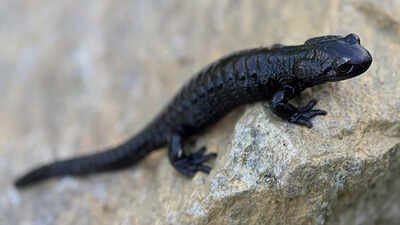
If you’re looking for the animal with the longest pregnancy on Earth, don’t think of whales or elephants. It’s actually the Alpine salamander. It is a small, dark amphibian tucked away in the high mountains of Europe. This little creature is a record-breaker. Its pregnancy can drag on for years. At lower altitudes, it’s about two to three years, but climb higher, where it gets colder, and some females carry their young for four or even five years.Most amphibians lay eggs in water, but not these salamanders. They skip the whole egg stage and give birth to fully formed babies. It’s a smart move, honestly, since life in the mountains isn’t easy and their babies need every advantage they can get. This extraordinary reproductive strategy has made the Alpine salamander a fascinating subject of study for scientists and nature enthusiasts alike.
Nature’s slowest pregnancy: How the Alpine salamander carries babies for years
The Alpine salamander doesn’t just set records, they blow the competition away when it comes to gestation. These little creatures hang onto their developing young for a jaw-dropping 37 to 38 months, and that’s just the average. In the colder, higher parts of the mountains, they can stretch it out to four or even five years. That’s wild, especially when you remember humans are done in nine months. This marathon pregnancy gives the embryos time to fully develop in tough conditions. As per a study titled “Epitheliophagy: intrauterine cell nourishment in the viviparous alpine salamander, Salamandra atra (Laur.)“, published in PubMedCentral, it is believed that this long gestation actually lets the embryos grow up completely, even in tough environments. That way, they’re more likely to survive once they’re born. It’s a pretty rare case where you can see the environment shaping how wild animals reproduce.
What is gestation and why does it vary
Gestation is the time between conception and birth when the embryo grows inside the mother. How long this takes really depends on the animal, as things like metabolism, size, and how developed the baby needs to be at birth all matter. Temperature makes a big difference, too. In colder places, embryos develop more slowly because their metabolism slows down, so the gestation period becomes longer.
Unique reproductive strategy of alpine salamanders
Most amphibians lay their eggs in water, but Alpine salamanders do things differently; they actually give birth to live young. Their babies grow inside the mother for a long time, getting all their nourishment from her, so they skip the usual larval stage. Because of this, the young salamanders are born fully developed and ready to handle life on their own. Plus, since they spend so much time growing before birth, these salamanders come out bigger and stronger than most, which helps them compete and stay safe from predators. This kind of reproductive strategy is really rare for amphibians and just goes to show how creative evolution can get.
Where Alpine Salamanders live and why it matters
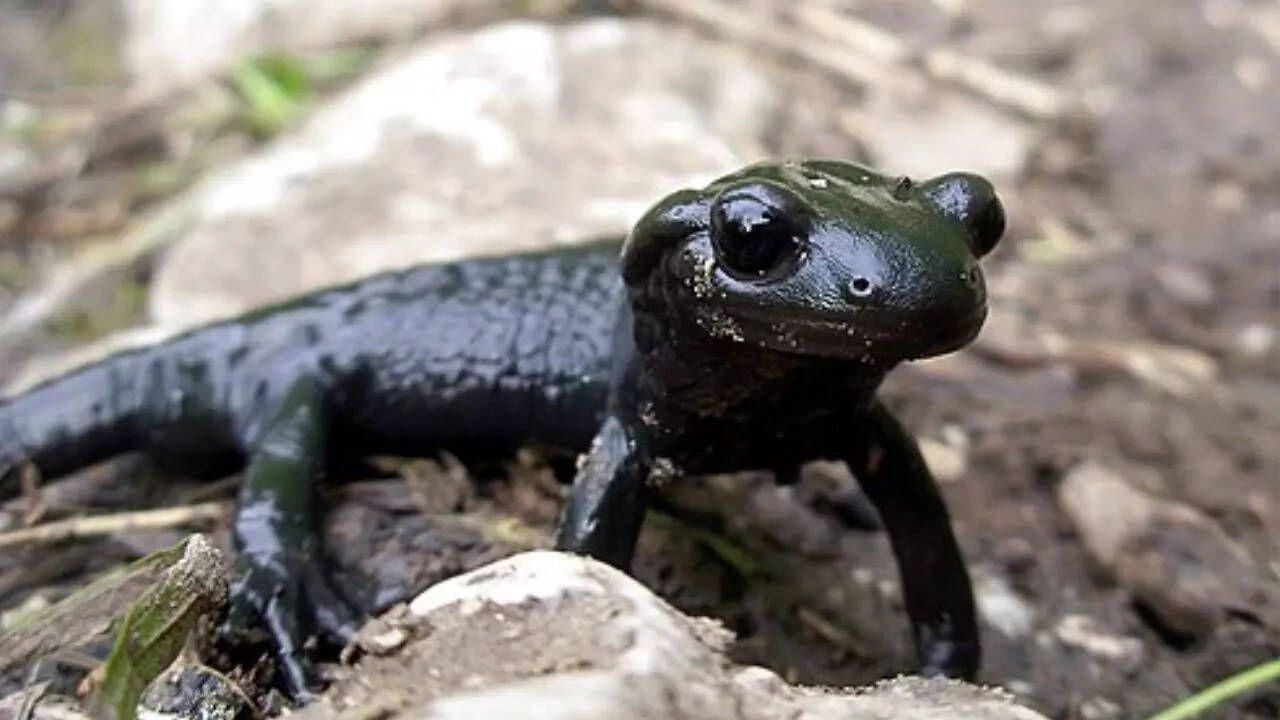
Where Alpine Salamanders live and why it matters (Image source: Wikipedia)
Alpine salamanders are found throughout the European Alps. They thrive in rocky, cool habitats, where traditional so the egg-laying process would be risky. The cold mountain climate slows their metabolism, which in turn extends the development time of their young. Their adaptation to such extreme habitats shows how environmental pressures shape not only life cycles but also survival strategies.
Alpine Salamander vs. other long-gestation animals
Elephants carry their young for almost two years, and frilled sharks can be pregnant for about three and a half. But the Alpine salamander takes things to a whole new level. No other land animal has a gestation period that long. Even creatures we usually call “slow developers” can’t keep up with this little amphibian. The salamander proves you don’t have to be big or warm-blooded to pull off some truly wild reproductive strategies. It flips the script on what we think we know about size and pregnancy, showing that the environment can matter a whole lot more than how big you are when it comes to how long it takes to develop.