Union Budget 2026-27: FM hands out a mixed bag for capital markets

Finance Minister Nirmala Sitharaman delivered a mixed bag to capital market prioritising long-term capital instruments over short term one in Budget 2026-27.
While raising tax on derivative transactions, the FM increased investment limits for NRIs, rationalised taxation on share buybacks, and proposed measures to deepen bond markets.
Ms. Sitharman proposed to raise the STT on Futures contract to 0.05% from present 0.02%. STT on options premium and exercise of options are both proposed to be raised to 0.15% from the present rate of 0.1% and 0.125% respectively, she said in her speech in Parliament on Sunday (February 1).
The move comes on the speculation by retail traders on the derivative market leading to 90% of them losing their money. While stock markets crashed upto 2% after this announcements tax experts say this is more of “a speed bump than a roadblock.”
“Traders are understandably concerned about the 150% hike in STT on Futures and 50% on Options. While this impacts high-frequency traders, for long-term investors, this isn’t a big issue. The government’s goal is to reduce speculation and encourage capital toward productive assets. A similar panic in 2018, when LTCG was reintroduced, didn’t last, and markets continued to rise,” said Archit Gupta, Founder and CEO, ClearTax.
While the announcement was enough to keep market players disappointed, Ms. Sitharaman delivered a sweet pill in the form of an increase in foreign investment limit for non-resident Indians.
“Individual Person Resident Outside India (PROI) will be permitted to invest in equity instruments of listed Indian companies through the Portfolio Investment Scheme. It is also proposed to increase the investment limit for an individual PROI under this scheme from 5% to 10%, with an overall investment limit for all individual PROIs to 24%, from the current 10%,” the FM said in her speech.
In another move, the Finance Minister announced that gains of minority shareholders from share buybacks will be treated as capital gains, rationalising taxation with other assets. “The incidence of tax is now on minority shareholders,” said Lokesh Shah, Partner at CMS INDUSLAW. “Prior to 2024, the impact was 23% to be paid by the company… between 2024 till today, for example, the impact was very high, say 39% for an individual tax payer,” he said, adding that this has now become 12.5% for holdings longer than a year.
Beyond equity capital markets, the FM also proposed to provide a ₹100-crore incentive for single municipal bond issuances above the value of ₹1,000 crore. This is expected to improve municipal bond issuances which are currently lukewarm. Further, her Ministry also proposed a framework to create markets on corporate bond indices and total returns swaps on such bonds.
Speaking on the significance of the incentives for municipal bonds , Anuradha Basumatari, Director, India Ratings & Research said, “There has been no single municipal bond issuance above INR 1,000 crore so far, with sizes ranging from INR 25 crore to INR 244 crore. A INR 1,000 crore issuance is substantial even for large municipal corporations, but the higher incentive should encourage financially robust municipal corporations, with a track record of capex execution and debt-servicing capacity, to consider larger issuances.”
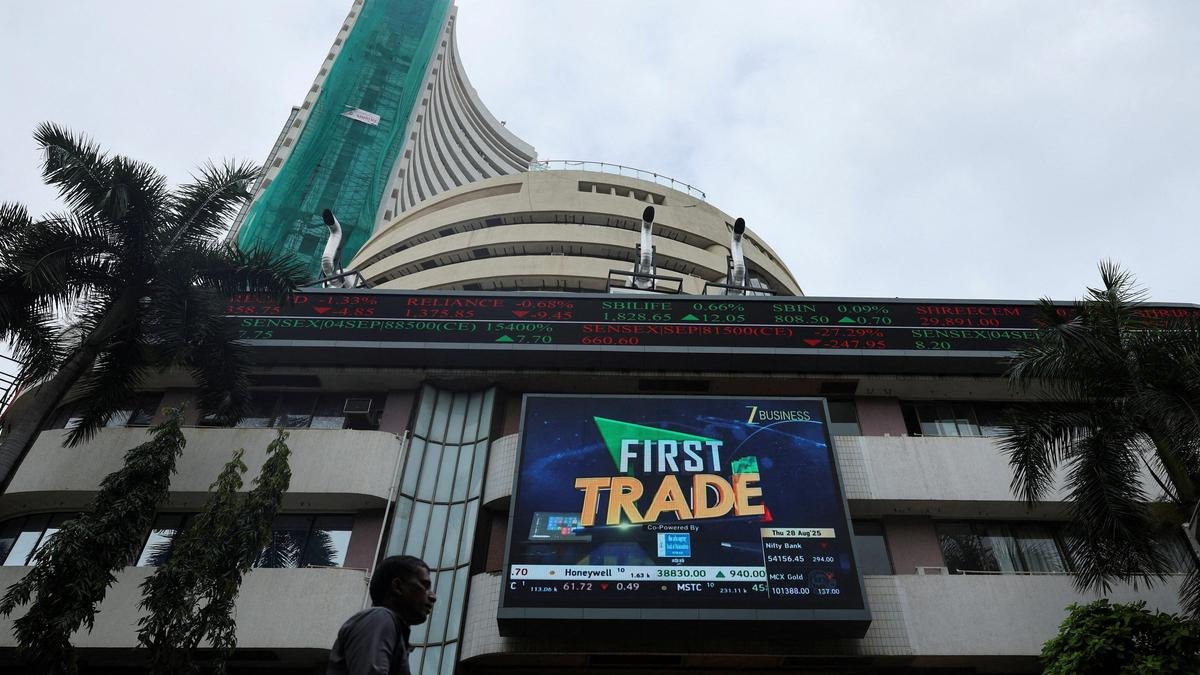
Despite the market broadening and deepening measures taken in line with the reccommendations of the Economic Survey, markets reacted negatively falling about 2%. Some experts called it “knee jerk” while others called the STT hike “disappointing.”
Published – February 01, 2026 10:32 pm IST