

Muted Ramadan in Iran as kin mourn protest victims | India News
[ad_1]
As Muslims across the world began observing the holy month of Ramadan on Wednesday, the usual fervour associated with the festival is highly subdued in Iran, according to Iranians living in India and western countries, reports Kalyan Das. Members of the diaspora told TOI that many families back home are grappling with grief following recent anti-regime protests and the deaths of loved ones, leading to a marked shift in how the holy month is being observed. Mohammed (who asked to be identified by his first name), an Iranian who has been living in Delhi for nearly a decade, said conversations with his family reflect deep anguish and anger. “How could we mark the month when there have been so many deaths during the recent anti-regime protests?” he said.As Muslims across the world began observing the holy month of Ramadan on Wednesday, the usual fervour associated with the festival is highly subdued in Iran, according to Iranians living in India and western countries. Members of the diaspora told TOI that many families back home are grappling with grief following recent anti-regime protests and the deaths of loved ones, leading to a marked shift in how the holy month is being observed.
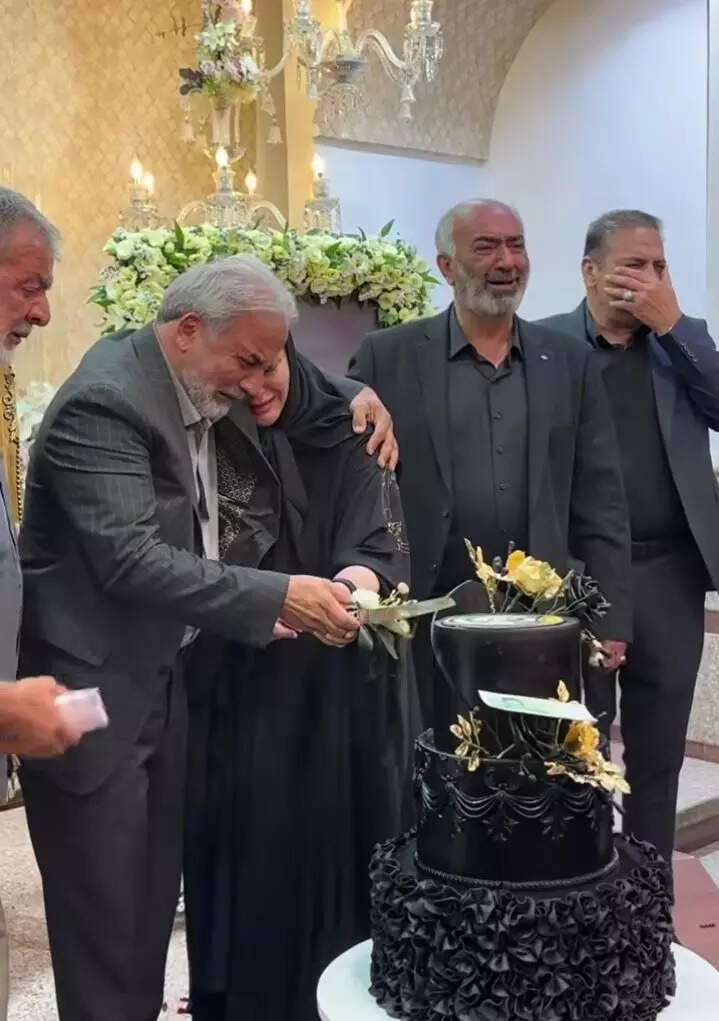
Parents of a young man killed in protests, celebrating by cutting a black cake amid showering of money in an act of dissent in grief. (Credit: Sourced from an Iranian)
Mohammed (who asked to be identified by his first name), an Iranian who has been living in Delhi for nearly a decade, said conversations with his family reflect deep anguish and anger. “How could we mark the month when there have been so many deaths during the recent anti-regime protests?” he said. “People are instead observing the martyrdom of their dear ones — gathering at graves, singing and even dancing. It is an act of defiance to show the regime that killing protesters has not silenced dissent but inspired more to stand up peacefully.”He added that videos shared by his relatives show families clapping and singing at grave sites. “Earlier, families would wear black and mourn. Now, many are suppressing visible sorrow and choosing symbolic gestures of resistance. Through that act, they are challenging the regime,” he said.TOI independently verified the claims and came across several such videos in which families appeared to be singing and clapping near the graves of relatives who allegedly died during the unrest.Bahaar Ghorbani, another Iranian living in India, claimed that nearly 40,000 people, including women and children, were killed during the protests. “In recent years, more people have been openly eating during fasting hours as a mark of dissent. Authorities no longer strictly act against those not observing the fast. This time, the mood is even more intense because of the mass killings. Ramadan feels different,” she said.Helma, an Iranian based in Hyderabad, pointed to economic hardship as another reason behind the subdued atmosphere. “Many people cannot afford basic food items. There is also anxiety over a possible war with the US, which people fear would worsen the situation. In such circumstances, people are struggling to focus on religious observances,” she added.In Dec last year, demonstrations broke out across several cities in Iran amid widespread unrest directed at the govt and mounting economic distress. The upheaval was described by observers as the most significant challenge to the establishment since the 1979 Islamic Revolution.The subsequent security crackdown involved the use of live ammunition against protesters.Rights groups and activists have alleged that the violence led to tens of thousands of deaths, describing it as among the deadliest episodes in the country’s modern history.
[ad_2]
Source link
You are a very clever person!
Very interesting subject , regards for putting up.
I and my friends were found to be digesting the good tips and tricks located on your website and then before long I had a terrible suspicion I never expressed respect to the site owner for those tips. These young men were consequently happy to learn them and now have in reality been making the most of those things. Many thanks for being so helpful as well as for settling on this kind of superb subjects millions of individuals are really desperate to learn about. My sincere apologies for not expressing appreciation to sooner.
hey there and thank you for your information – I have certainly picked up anything new from right here. I did however expertise several technical points using this site, as I experienced to reload the site many times previous to I could get it to load properly. I had been wondering if your hosting is OK? Not that I’m complaining, but slow loading instances times will sometimes affect your placement in google and can damage your high quality score if ads and marketing with Adwords. Well I’m adding this RSS to my e-mail and can look out for much more of your respective exciting content. Ensure that you update this again very soon..