

Tokyo Drift: The art of going sideways
There is a moment — somewhere between the first transition and the second lungful of tire smoke — when drifting stops feeling like automotive theatre and starts making complete sense. For me, it happened at Mobara Twin Circuit, about 90 minutes outside Tokyo, strapped into the passenger seat of a sideways Nissan Silvia S15. Fausto, a reigning Drift Champion, held the car at an angle that felt mechanically impossible, balancing opposite lock with millimetric precision while another drift car hovered inches from my side window. The rear tires dissolved (were evaporating) into smoke. The engine hammered (sat hard) against the limiter. Every instinct in my body suggested we were moments away from disaster. But the strange thing was how controlled it all felt.
That is drifting in Japan. From a distance, it looks like chaos. Up close, you realise it is one of the most disciplined forms of driving in the world — precision disguised as violence, commitment masquerading as madness. And nobody understands that balance better than Japan, for that is where the art of drifting came to be.
The Strange Beauty of Losing Control
Most motorsport is built around grip. Drifting, almost uniquely, is built around abandoning it. At its core, drifting is the art of intentionally unsettling a car and then maintaining control once traction has already been broken. The objective is not outright speed through a corner, but angle, fluidity, proximity, and style. The car is not simply cornering — it is rotating, sliding, balancing itself on the edge of adhesion while the driver continuously catches and sustains the slide.
The underground spirit of Japanese car culture comes alive through sideways action at Mobara Twin Circuit.
| Photo Credit:
Special Arrangement
In professional competition, drivers are judged on commitment as much as execution. How aggressively the car enters a corner. How much angle is carried mid-slide. How close two cars can run in tandem without touching. It is one of the few motorsports where style is not a byproduct — it is the point. And yet, what makes drifting fascinating is how technical it really is beneath the spectacle.
Modern drift cars are engineered specifically for controlled oversteer. Steering angle kits allow the front wheels to rotate dramatically beyond normal limits. Suspension geometry is configured to stabilise the chassis while the car is sideways, and engines produce immense bursts of torque to simply keep the rear tires spinning continuously through a corner.
But no amount of engineering replaces driver skill. The best drift drivers are constantly balancing throttle input, steering correction, braking, weight transfer, and momentum — often making dozens of micro-corrections within a single corner. From outside the car it looks dramatic. From inside, it feels like organised violence.
Born on Japan’s Mountain Roads
To understand drifting properly, you have to understand where it came from. Long before global championships, livestreams, or factory-backed drift teams existed, drifting lived on Japan’s touge roads — narrow mountain passes winding through the countryside during the 1970s and 1980s. Drivers discovered that rotating the car through corners helped maintain momentum on tight downhill sections. But somewhere along the way, practicality evolved into expression.
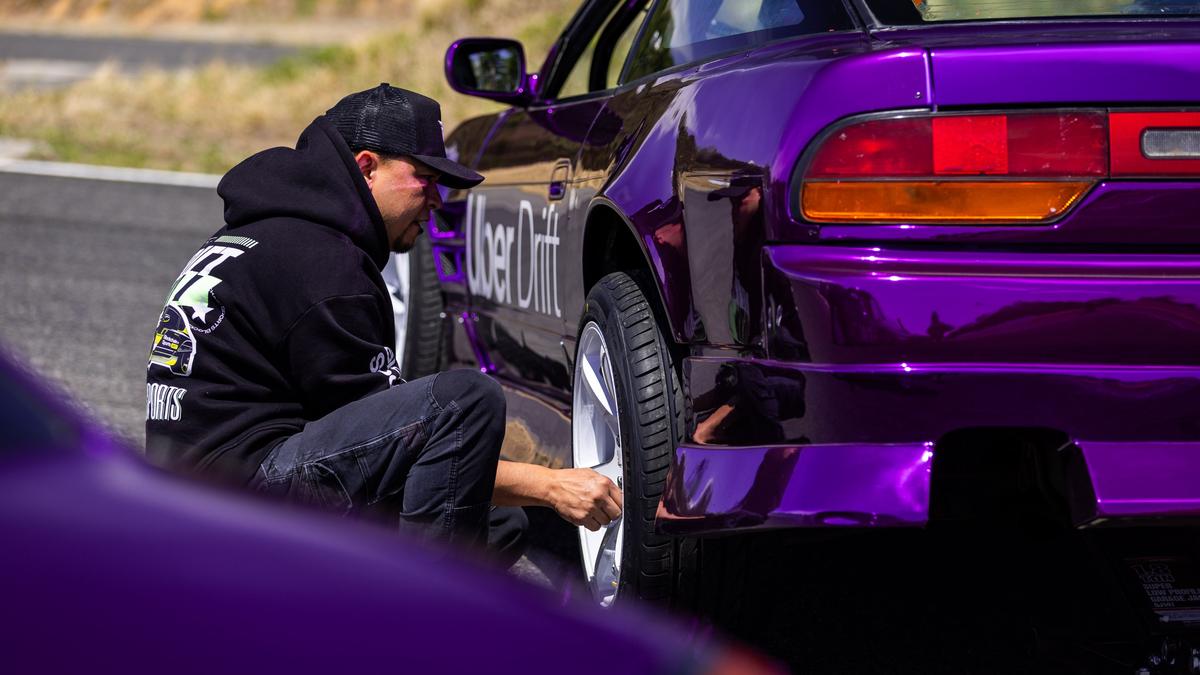
Professional drift drivers demonstrate millimetre-perfect control during a high-speed tandem run in Japan.
| Photo Credit:
Special Arrangement
The slide itself became the attraction. The foundations of modern drifting are often traced back to Kunimitsu Takahashi, whose aggressive racing style inspired an entire generation of Japanese drivers. But it was Keiichi Tsuchiya — the legendary “Drift King” — who transformed drifting from underground technique into cultural phenomenon. Through videos, demonstrations, and organised competition, Tsuchiya gave legitimacy to something that had previously existed in the shadows of Japanese car culture.
Even today, drifting in Japan still feels deeply connected to that underground identity. You see it at late-night meets in Daikoku Parking Area. In battered Nissan Silvias running zip-tied bumpers and mismatched panels. In turbocharged straight-six engines echoing through industrial districts somewhere outside Yokohama. Unlike many modern motorsports that have evolved into polished corporate spectacles, drifting still feels raw around the edges.
That roughness is part of its appeal. The cars are rarely pristine. They are driven hard, repaired constantly, modified endlessly, and worn proudly. Drifting culture values commitment over perfection.
Why Drifting Looks Impossible
The theory behind drifting sounds deceptively simple: break traction, hold the slide, maintain control. The reality is anything but.
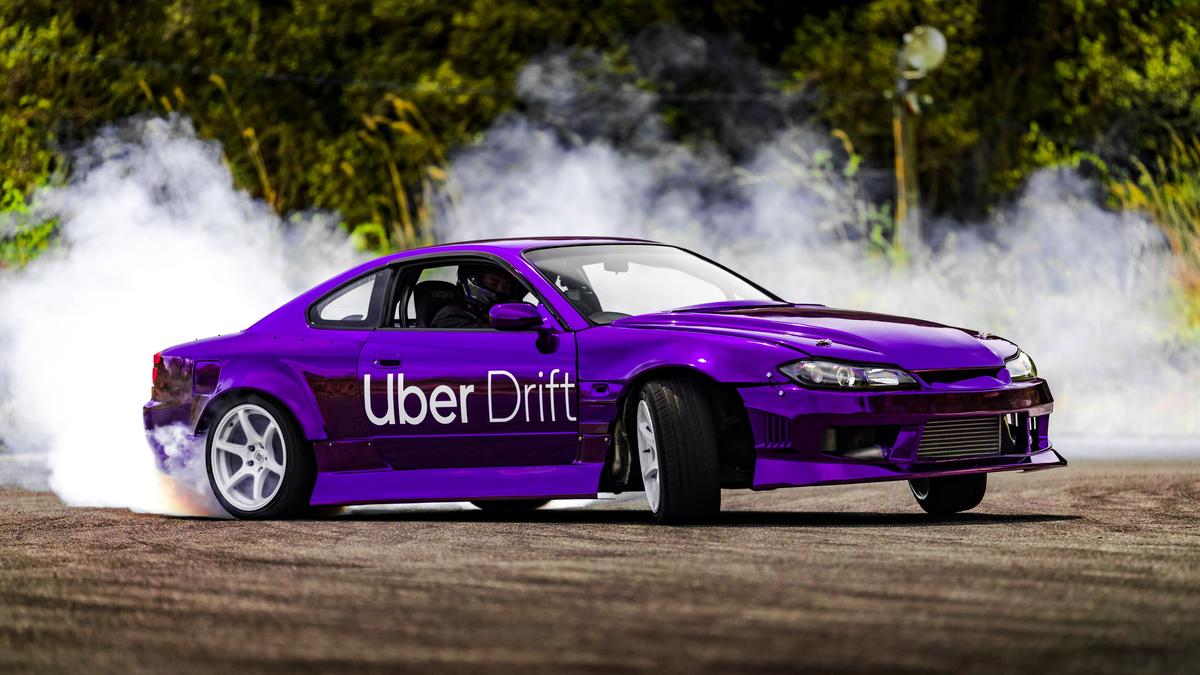
Tire smoke, opposite lock, and terrifying proximity — drifting in Japan is as technical as it is theatrical.
| Photo Credit:
Special Arrangement
Most drift cars are rear-wheel drive, allowing drivers to initiate oversteer using clutch kicks, handbrake inputs, aggressive weight transfer, or sheer throttle application. Once the rear steps out, the driver countersteers while balancing engine torque to sustain the slide through the corner.
Everything happens violently fast. Too little throttle and the car regains grip abruptly. Too much and it rotates uncontrollably into a spin. Drivers are constantly balancing instability against control, managing a car that fundamentally wants to do the exact opposite of what physics would normally allow.
What separates professional drifting from amateur attempts is smoothness. The best drivers make the entire process appear fluid — almost relaxed — despite the enormous amount of calculation happening in real time. And that composure becomes far more obvious once you experience drifting from inside the car itself.
Experiencing Drift Culture Properly
For years, authentic Japanese drifting remained surprisingly difficult for outsiders to access. Unless you had local connections, most visitors experienced the culture from a distance — through YouTube videos, occasional car meets, or heavily curated tourist experiences.
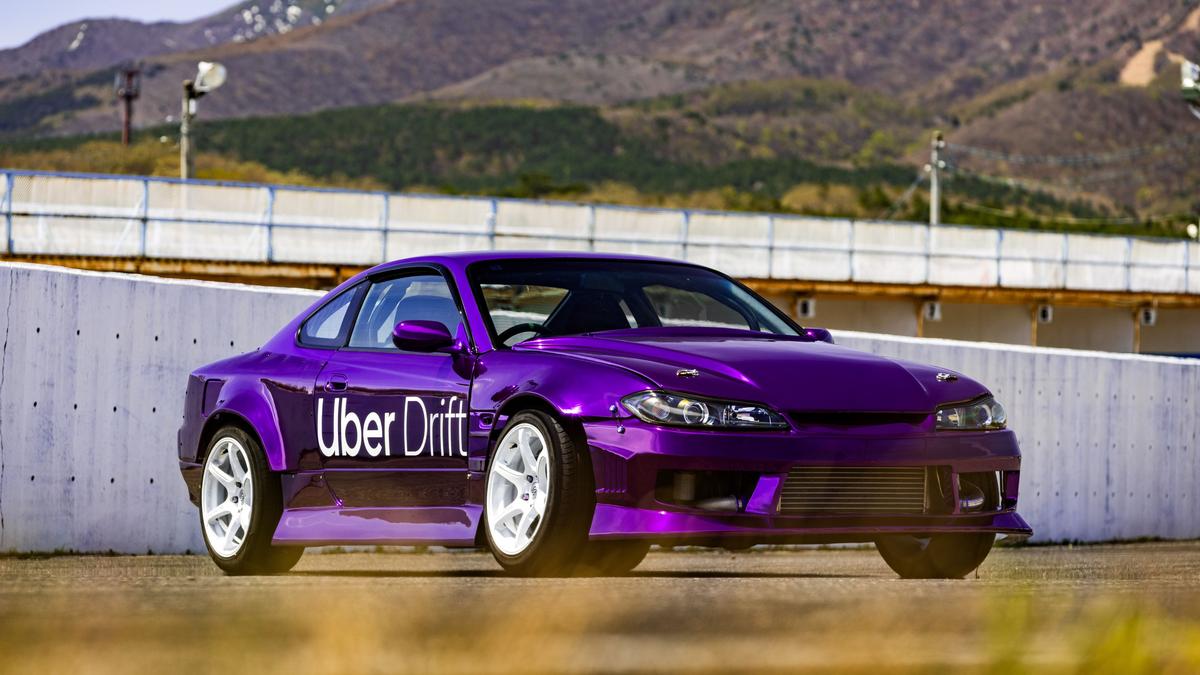
Uber Drift offers visitors rare access to the raw intensity of authentic Japanese drifting culture.
| Photo Credit:
Special Arrangement
That is what makes Uber Drift interesting. As part of Uber’s limited-edition “Go Anywhere” experiences —Uber Drift essentially opens a door into one of Japan’s most iconic automotive subcultures without sanitising it completely.
The experience begins with an Uber Black pickup from central Tokyo before heading toward Mobara Twin Circuit, a venue deeply rooted in grassroots Japanese motorsport culture. Once there, guests climb into a pair of genuine Japanese drift icons — a Nissan Silvia S15 and Nissan 180SX — alongside Formula Drift licensed professional drivers for tandem drift sessions around the circuit.
And it is only once the car goes sideways for the first time that you fully appreciate how physical drifting really is. The car snaps into an angle under braking, transitions violently between corners, and somehow continues carrying speed despite appearing permanently moments away from spinning. The steering wheel never stops moving. Tire smoke floods through the cabin. Another drift car fills your side window while both cars remain completely sideways at terrifying proximity.
Yet the driver remains impossibly calm throughout. That calmness is perhaps the most impressive part of drifting. Professional drivers operate with a level of mechanical understanding and confidence that completely changes your perception of the sport. What initially looks reckless reveals itself to be deeply calculated.
It is an adrenaline fuelled experience, and for motorsport enthusiasts or even fans of car culture, this is an opportunity that honestly should not be missed.motr
Published – May 30, 2026 10:33 am IST