Oil prices fall amid Trump’s talks with Iran
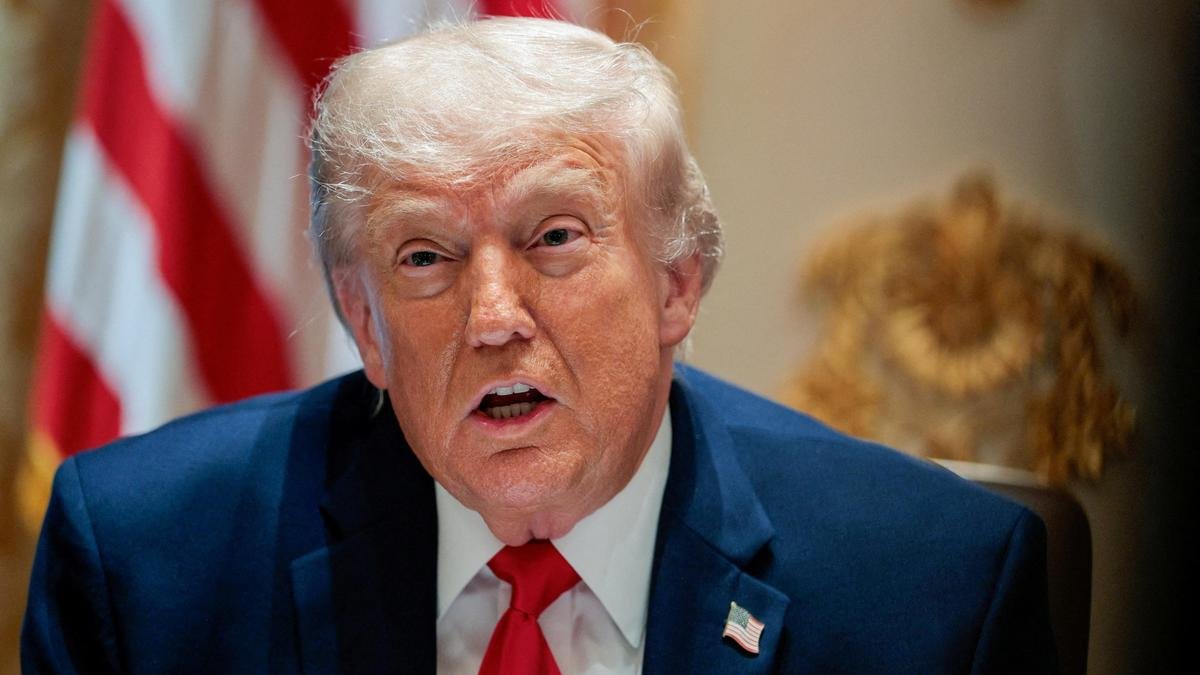
U.S. President Donald Trump. File
| Photo Credit: Reuters
Oil prices trended lower on Tuesday (June 2, 2026) following the previous session’s sharp gains as the market remained cautious about progress in U.S.-Iran peace talks. U.S. President Donald Trump said on Monday (June 1, 2026) talks with Iran were ongoing, while Tasnim news agency reported earlier that Tehran had suspended indirect negotiations with Washington.

Brent crude futures lost 75 cents, or 0.79%, to $94.23 a barrel at 0434 GMT, while U.S. West Texas Intermediate fell 85 cents, or 0.92%, to $91.31 a barrel. Both benchmarks rose more than 5% in the previous session, having posted a monthly loss of more than 16% in May on hopes of a peace deal.
“While markets had hoped to move past the uncertainty amid prospects of a potential deal, nothing appears to have changed for oil as of this morning,” said Priyanka Sachdeva, senior market analyst at Phillip Nova.
In an interview with CNBC on Monday (June 1, 2026), Mr. Trump said he did not mind if the talks were over. But shortly after, he issued a social media post saying talks with Iran were continuing and told ABC News that he expected a deal to extend the ceasefire and reopen the Strait of Hormuz“ over the next week”.

“The market is currently focused on whether there’s any concrete progress or setbacks in U.S.-Iran negotiations, the tone and substance of statements from both sides (particularly Iran’s threats regarding the Strait of Hormuz), and actual physical tanker movements through the waterway,” said Tim Waterer, chief market analyst at Kohle Capital Markets (KCM) Trade.
The status of the U.S.-Iran negotiations at any given point will ultimately determine whether the current risk premium stays embedded in oil prices or starts to unwind, Mr. Waterer added. Lebanon on Monday (June 1, 2026) announced a partial ceasefire between Hezbollah and Israel, in what would amount to a limited de-escalation of a conflict that has inflamed the broader war with Iran.
Iran has effectively halted nearly all non-Iranian shipping into and out of the Gulf since the war began, choking off about a fifth of global oil and liquefied natural gas flows and driving prices up by 50% or more. U.S. crude exports climbed to a record 5.6 million barrels per day in May as the Middle East crisis pushed up demand for the country’s oil from Asian and European refiners, ship tracking estimates showed on Monday (June 1, 2026).

According to a preliminary Reuters poll released on Monday (June 1, 2026), U.S. crude stockpiles are expected to have fallen by about 3.6 million barrels in the week ended May 29, extending the prior week’s draw, while distillates and gasoline inventories also are likely to have declined.
Shipping executives meeting in Athens on Monday (June 1, 2026) said that any peace deal worked out between the U.S. and Iran would need to offer clear rules allowing vessels to resume normal business via the Strait of Hormuz.
Published – June 02, 2026 11:52 am IST