


‘PM very angry’: Congress says BJP splitting parties to ‘take revenge’ for Delimitation Bill setback | India News
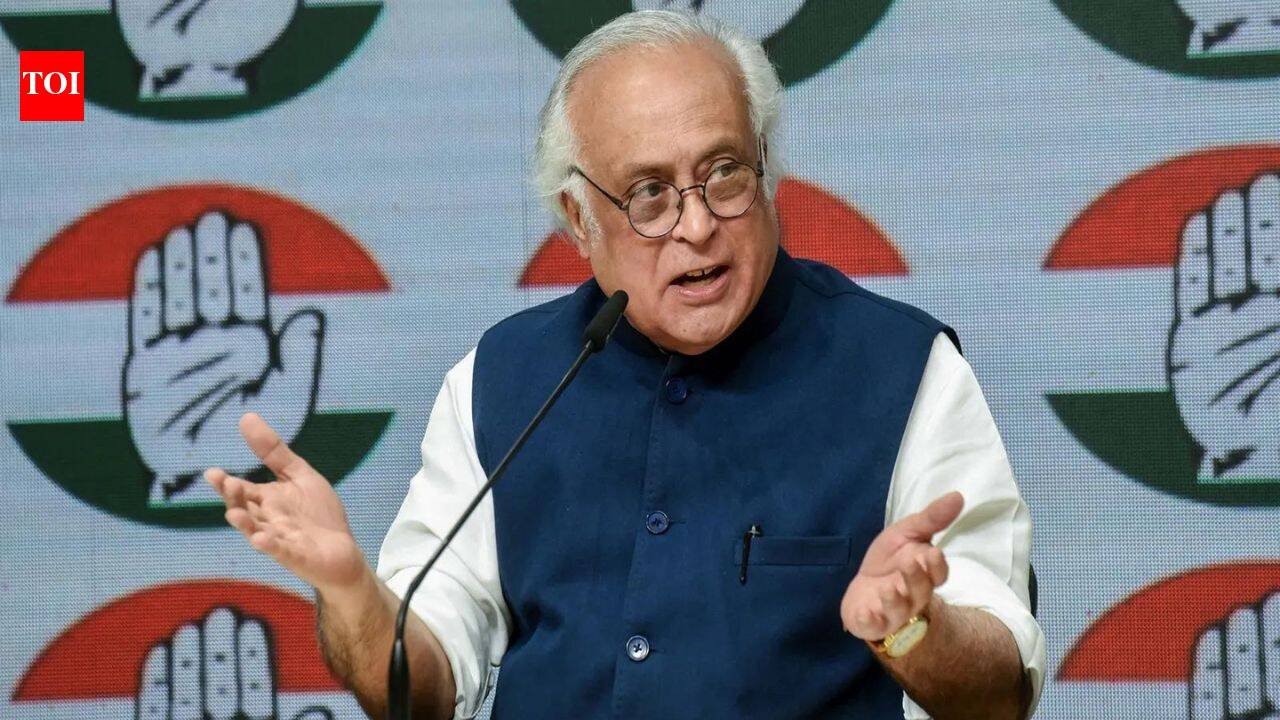
NEW DELHI: Congress on Saturday alleged that the Bharatiya Janata Party is taking “revenge” on the opposition by splitting parties after failing to pass the Delimitation Bill in Parliament.Congress MP Jairam Ramesh claimed that Prime Minister Narendra Modi and Union Home Minister Amit Shah were very angry after the Delimitation Bill lapsed because the government failed to secure a two-thirds majority in Parliament in the Budget Session.“The Prime Minister was very angry over the Delimitation Bill. The anger was visible on his face. The Home Minister was also angry. Despite many efforts, they didn’t get a two-thirds majority, and they’re now taking revenge. This is revenge politics. They’re splitting parties… But they’re not going to get a two-thirds majority. They’re very adept at playing psychological games,” Jairam Ramesh said.“Their real motive is to change the Constitution of India. The purpose of crossing 400 was to be in a position to change the Constitution. The issue is reservation, regarding social justice. They want to run away from it. They want to abolish it. That’s why they’re after a two-thirds majority,” he added.This comes after opposition parties like Trinamool Congress and Shiv Sena (UBT) suffered splits after several leaders jumped ship and joined rival factions.TMC split into factions led by Mamata Banerjee and Leader of the Opposition Ritabrata Banerjee in the state Assembly. Meanwhile, 20 of TMC’s 28 Lok Sabha MPs also merged with the little-known National Citizens’ Party of India and pledged support to the BJP-led NDA government at the Centre.Additionally, six Lok Sabha MPs of Shiv Sena (UBT) joined the Shiv Sena, an NDA partner.The MPs who switched sides are Sanjay Haribhai Jadhav, Sanjay Dina Patil, Bhausaheb Rajaram Wakchaure, Sanjay Uttamrao Deshmukh, Nagesh Patil Ashtikar and Omraje Nimbalkar.Their defection reduces the Uddhav faction’s strength in the Lok Sabha to just three MPs, while the Shinde-led Shiv Sena now has 13 members. The significance of the move lies in the numbers. The six MPs constitute two-thirds of Shiv Sena (UBT)’s Lok Sabha strength—the threshold required under the anti-defection law to merge with another party without inviting disqualification.Their formal induction into the Shinde camp marks the first major parliamentary split in the Uddhav-led faction since the 2024 Lok Sabha elections.

Hey! I could have sworn I’ve been to this website before but after checking through some of the post I realized it’s new to me. Anyhow, I’m definitely happy I found it and I’ll be book-marking and checking back frequently!