

Renault Duster 2026 review: Design, features, performance and relevance in today’s SUV market
The Renault Duster is not just another SUV making a comeback; it carries the weight of having once rewritten the rulebook. When it first arrived, the idea of a rugged, monocoque SUV that could handle Indian roads with ease was still novel. Over time, that formula became the industry standard. Now, the Duster returns to a market it helped create, but one that has evolved dramatically in its absence. The question, then, is not whether it is good, but whether it still feels relevant.
At first glance, the answer leans strongly in its favour. The design has matured without losing its identity. There is a clear effort to retain the upright, no-nonsense stance that defined the original, but it is now layered with sharper detailing and a more contemporary finish. The front end is particularly distinctive, with its clean LED lighting signature and a grille that confidently spells out the Duster name. It is a subtle but important statement; this is a badge that has earned its recognition. The sculpted bonnet, pronounced bumper with its silver skid plate and neatly integrated fog lamps add depth without appearing excessive.
Built for broken roads, but refined enough for everyday life.
| Photo Credit:
Special Arrangement
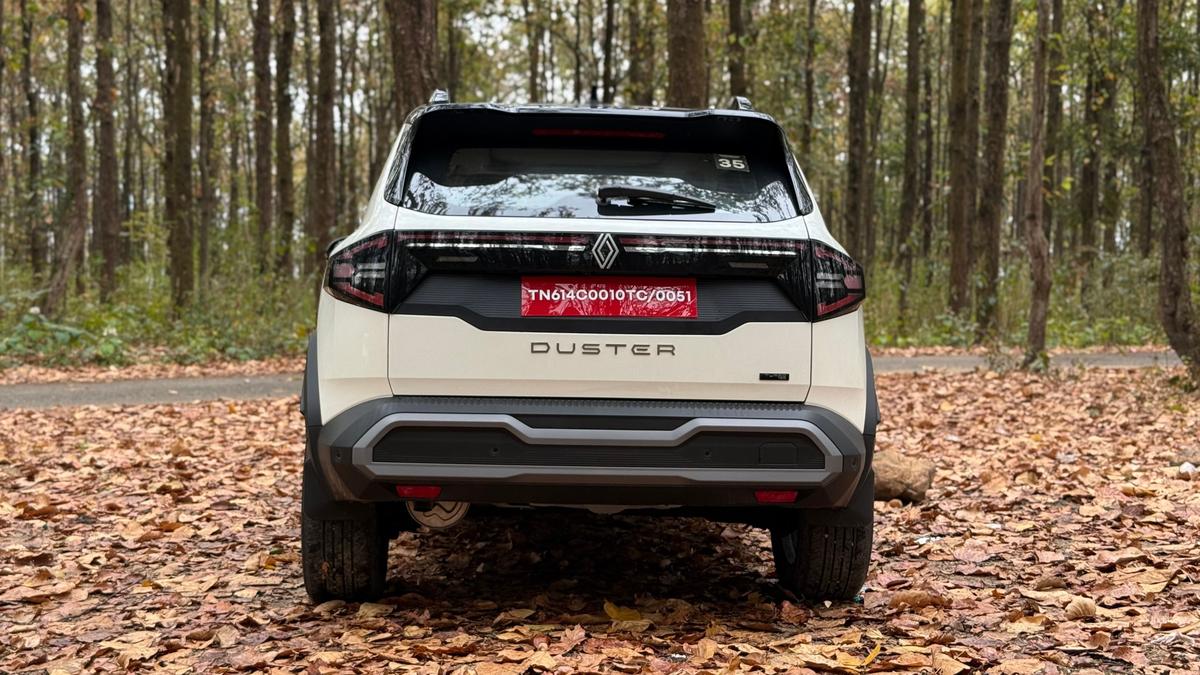
Along the sides, the SUV’s proportions do most of the talking. A strong shoulder line, squared-off wheel arches and generous cladding give it a muscular, planted look. The 18-inch alloys sit well within the arches, reinforcing that stance, while details like the rear door handles integrated into the C-pillar add a touch of modernity. At the rear, the connected LED tail lamps and clean surfaces keep things tidy, but the overall impression remains one of substance rather than style-led excess. It looks like it belongs on rough roads, not just outside a café.
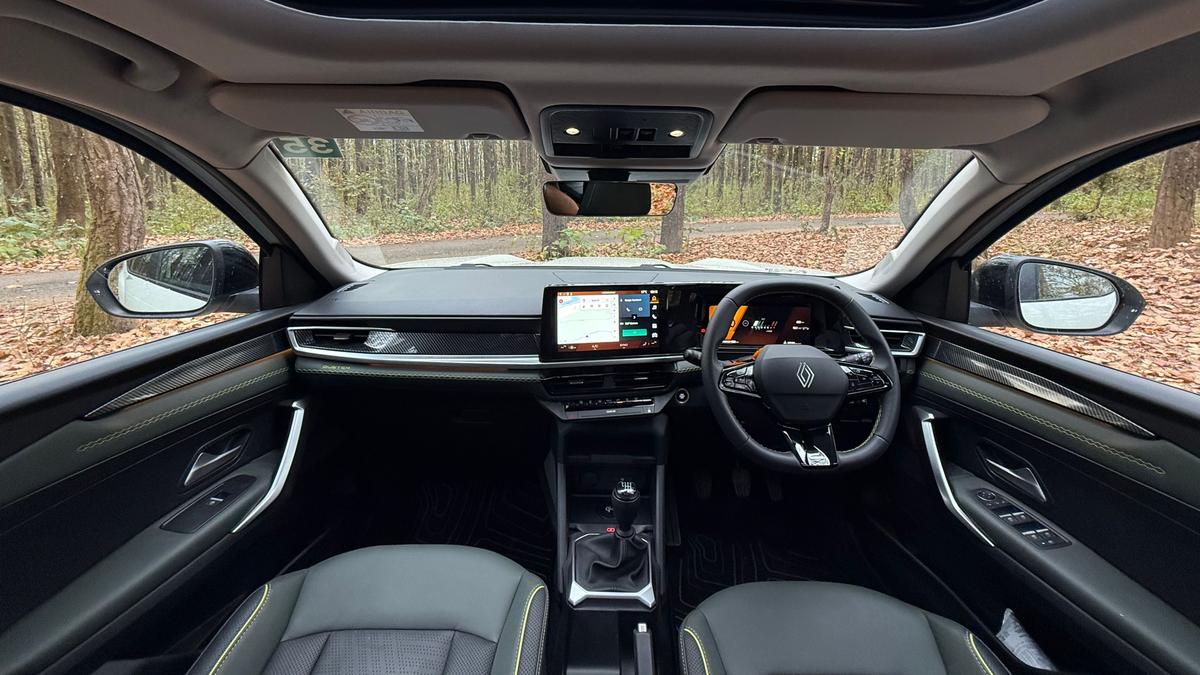
Step inside, and the shift in approach becomes even more apparent. The cabin of the 1.3 Turbo ICONIC variant feels like a genuine step forward in terms of quality and execution. Materials are better judged, panel gaps are tighter, and there is a noticeable improvement in overall fit and finish. The layout is modern, anchored by a 10.1-inch touchscreen infotainment system and a 10.25-inch digital driver display. Both screens are crisp and responsive, and the integration of Google-based services adds a layer of usability that feels current without being intrusive.
Where rugged design meets modern detailing and purpose.
| Photo Credit:
Special Arrangement
Crucially, Renault has not abandoned physical controls altogether. Climate functions and key toggles remain accessible through tactile buttons, which makes a real difference when you are driving on less-than-perfect roads. The front seats, which are both powered and ventilated, are particularly noteworthy. They are well-cushioned, supportive over long distances, and genuinely comfortable in a way that feels considered rather than spec-sheet driven. Add to that a panoramic sunroof, dual-zone climate control, wireless charging and a 360-degree camera, and the Duster begins to feel properly equipped for modern expectations.
Practicality, as always, remains a strong suit. Storage spaces are thoughtfully integrated, ergonomics are intuitive. While rear-seat space is not the most generous in the segment, it is perfectly usable for two adults. The boot, at 518 litres, is where the Duster really scores — it is large, accessible and genuinely useful, especially for longer trips.
Under the bonnet lies the highlight of this variant: the 1.3-litre turbo-petrol engine producing 163hp and 280Nm. It is a motor that feels both refined and eager, with a strong mid-range that defines the driving experience. There is a slight hesitation at lower revs, but once it gets into its stride, the pull is immediate and satisfying. Out on hilly roads, this translates into confident overtakes and a sense of effortlessness that is often missing in this segment.
Strong stance, simple intent—an SUV that looks ready for anything.
| Photo Credit:
Special Arrangement
The six-speed manual transmission adds another layer to that experience. It is precise and easy to use, and when you push the car harder, the engine’s torque becomes very apparent. In fact, under enthusiastic driving, it is entirely possible to break traction even in second gear — a reminder that beneath the composed exterior lies a genuinely strong powertrain. It is this duality — refinement when you want it, aggression when you ask for it, that gives the Duster its character.
For those seeking convenience, the DCT automatic offers a smoother, more relaxed driving experience. It does not chase outright speed in shifts, but instead focuses on delivering a seamless, predictable response, which works well in everyday conditions.
Beyond the 1.3, Renault also offers a 1.0-litre turbo-petrol engine producing 100hp and 160Nm, catering to a broader audience. More interestingly, a strong hybrid powertrain is set to arrive around Diwali this year. Combining a 1.8-litre petrol engine with an electric motor and hybrid support system, it delivers a combined output of 160hp, signalling a clear move towards future-ready mobility.
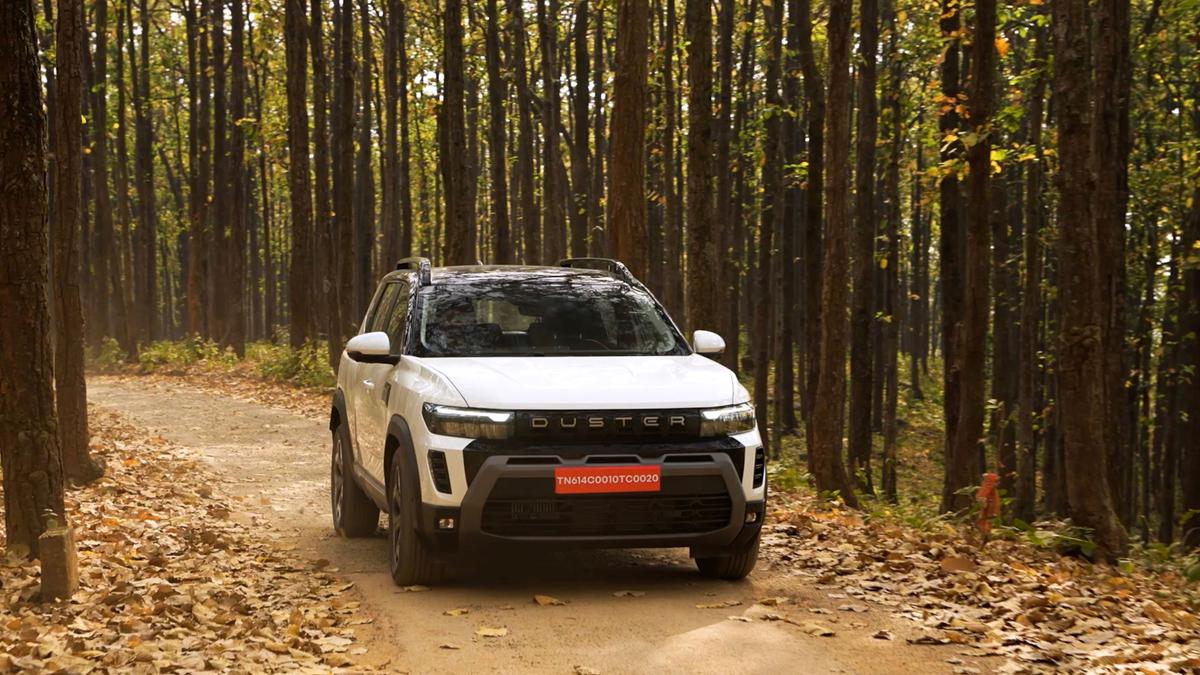
Not just a comeback, but a reminder of what made it matter.
| Photo Credit:
Special Arrangement
Ride quality continues to be a defining strength. The Duster absorbs rough surfaces with an ease that feels almost effortless. Broken patches, undulations and inconsistent road surfaces are dealt with in a manner that reinforces its rugged credentials. There is a slight firmness at low speeds, but it never becomes uncomfortable. At higher speeds, the car settles into a stable, composed rhythm, making it particularly well-suited for long-distance driving. Handling is predictable, with manageable body roll and a steering setup that is light but accurate.
Efficiency, in real-world terms, remains reasonable. While claimed figures sit above 18 kmpl, a mix of hill driving, idling and enthusiastic use resulted in returns closer to 13 kmpl. Given the conditions, that is a fair outcome, and under more typical usage, it should improve.
The absence of an all-wheel-drive option is, perhaps, the only notable omission. It is something long-time Duster enthusiasts will miss, especially given the model’s legacy. Renault has indicated that the platform can support AWD, but its return will depend on demand. For now, the focus remains firmly on front-wheel-drive configurations.
In a segment dominated by established players like the Hyundai Creta and Kia Seltos, the Duster does not try to outdo them at their own game. Instead, it brings a different perspective — one that prioritises robustness, driving feel and real-world usability over sheer feature count. Whether that will translate into market disruption remains to be seen, but what is clear is that the Duster has returned with intent. And this time, it feels ready for the fight.
Price: INR 10.29 – 18.49 lakh (depending on the variant)
Motorscribes, in association with The Hindu, brings you the latest in cars and bikes. Follow them on Instagram on @motorscribes
Regards for all your efforts that you have put in this. very interesting information.
I admire your piece of work, appreciate it for all the good content.