

Ferrari Luce: What has Ferrari gone and done?
A new chapter — Or a complete identity shift?
Ferrari has never been a company afraid of change. Throughout its history, Maranello has repeatedly challenged convention, whether through mid-engined super-cars, turbocharging, hybridisation or radical aerodynamic philosophies born from motor sport. Yet even by Ferrari’s standards, the unveiling of the Luce feels like a moment of enormous significance — and perhaps, enormous risk. This is not merely Ferrari’s first electric vehicle. It is a complete reimagining of what a Ferrari can be.
The Luce arrives as a five-seat, four-door grand tourer powered entirely by electricity. Built on a bespoke EV architecture and wrapped in a design language unlike anything Ferrari has produced before, it represents a bold departure from tradition. Ferrari describes the model as the beginning of a “new chapter” for the brand, one shaped by electrification, technological experimentation and a broader interpretation of performance luxury. In the process, however, the company may also have created the most divisive Ferrari of the modern era.
The reaction to the Luce has been immediate and sharply polarised. Within hours of its unveiling in Rome, social media and enthusiast forums filled with criticism aimed primarily at the car’s styling and overall identity. For many traditional Ferrari enthusiasts, the Luce neither looks nor feels like a Ferrari. The smooth, minimalist surfacing, enormous glasshouse and futuristic proportions have drawn comparisons to luxury consumer technology products rather than Italian exotica from Maranello. Even Ferrari’s stock reportedly fell by nearly seven percent following the reveal, suggesting that investor confidence may have been shaken alongside enthusiast sentiment.
Built on a bespoke electric platform, the Luce produces 1,050 horsepower from four electric motors and accelerates from 0-100 km/h in just 2.5 seconds
| Photo Credit:
Special Arrangement
Yet dismissing the Luce simply because it is different would miss the point entirely. Ferrari has not attempted to build an electric version of an existing Ferrari formula. Instead, it has created something fundamentally new — a car designed from the outset around the freedoms and challenges of an all-electric architecture.
The origins of the Luce
The Luce represents the culmination of Ferrari’s multi-energy strategy, through which the company is exploring a range of sustainable power trains solutions. Unlike several manufacturers that are rapidly moving away from internal combustion altogether, Ferrari maintains that electrification is simply another avenue through which performance and innovation can evolve.
According to Ferrari, the Luce was never intended to replace the company’s petrol-powered cars. Instead, it was conceived as an expansion of the Ferrari ecosystem — a new interpretation of performance made possible only through electric propulsion. In many ways, that philosophy explains why the Luce feels so radically different from every Ferrari that came before it.
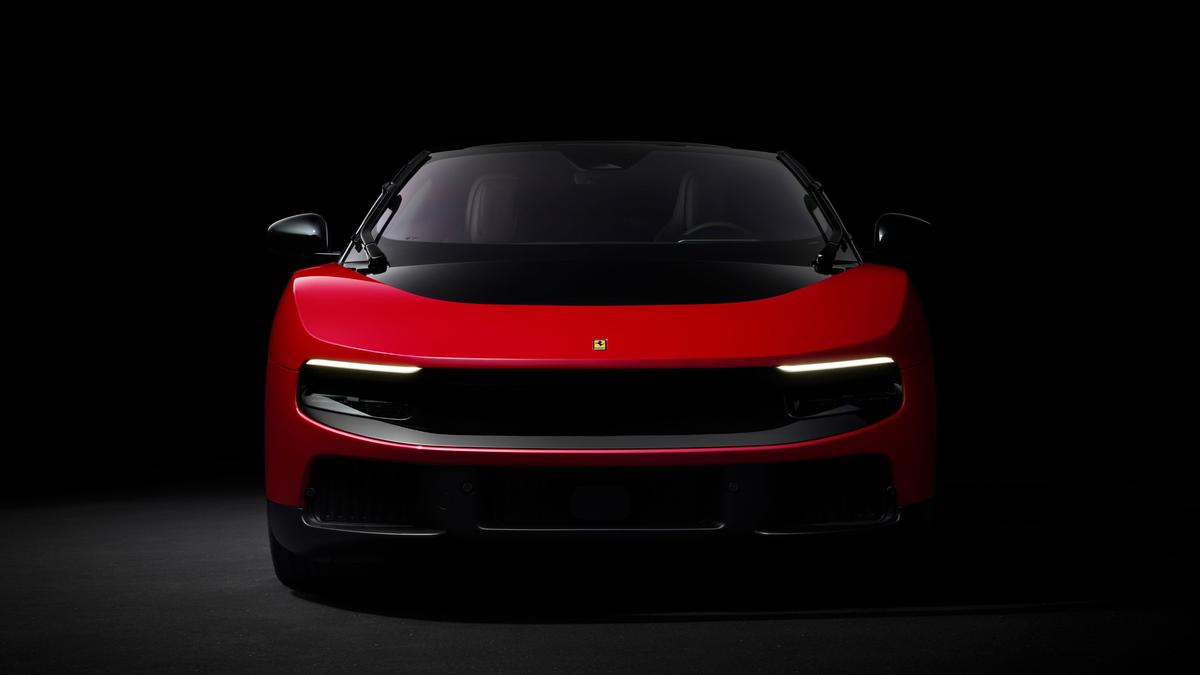
The Luce’s minimalist exterior and expansive glasshouse have divided opinion, making it one of the most controversial Ferraris in recent memory
| Photo Credit:
Special Arrangement
Ferrari also made the unusual decision to step outside its traditional design framework. The project was entrusted to LoveFrom, the creative collective led by legendary former Apple designer Sir Jony Ive and industrial designer Marc Newson. That collaboration immediately signalled Ferrari’s intention to approach this car from a completely different perspective, blending automotive engineering with the clean, minimalist philosophy more commonly associated with luxury consumer technology. The result is arguably the boldest stylistic gamble Ferrari’s has ever taken.
A design that has divided enthusiasts
If there is one aspect of the Luce that has triggered the strongest reactions, it is undoubtedly the design. Ferrari describes the shape as “pure” and “shell-like”, with uninterrupted surfacing and floating aerodynamic elements defining the overall silhouette. The enormous glasshouse dominates the proportions, while transparent lighting elements disappear into the bodywork when switched off. Even the aerodynamic philosophy is radically different, with smooth, uninterrupted surfaces replacing the aggressive vents, creases and sculpting traditionally associated with Ferrari.
There are still subtle nods to Ferrari heritage. The rear halo lights reference the 360 Modena and 458 Italia, while the proportions attempt to balance GT usability with sports car intent. Yet the overall impression is unmistakably futuristic and intentionally unconventional. For some, it looks elegant and refreshingly modern. For others, it barely resembles a Ferrari at all.
Part of the criticism stems from the fact that Ferrari has historically sold emotion as much as engineering. Its cars are expected to feel dramatic, sensual and theatrical. The Luce instead appears restrained, almost clinical in its execution. Its design language feels closer to contemporary architecture or industrial design than the passionate visual drama typically associated with Maranello. That sense of disconnect is precisely why the car has become so controversial.
The most technologically advanced Ferrari ever
Beneath its divisive styling lies one of the most ambitious engineering projects Ferrari has ever undertaken. The Luce is built on an entirely bespoke electric platform developed in-house at Maranello and powered by four electric motors — one for each wheel. Combined output stands at a staggering 1,050 horsepower, allowing the Luce to sprint from 0-100 km/h in just 2.5 seconds and 0-200 km/h in 6.8 seconds, before reaching a top speed of over 310 km/h.
Power comes from a 122 kWh battery pack integrated directly into the vehicle structure itself. Ferrari claims a range of more than 530 kilometres, while 350 kW fast charging allows 70 kWh of charge to be added in around 20 minutes.
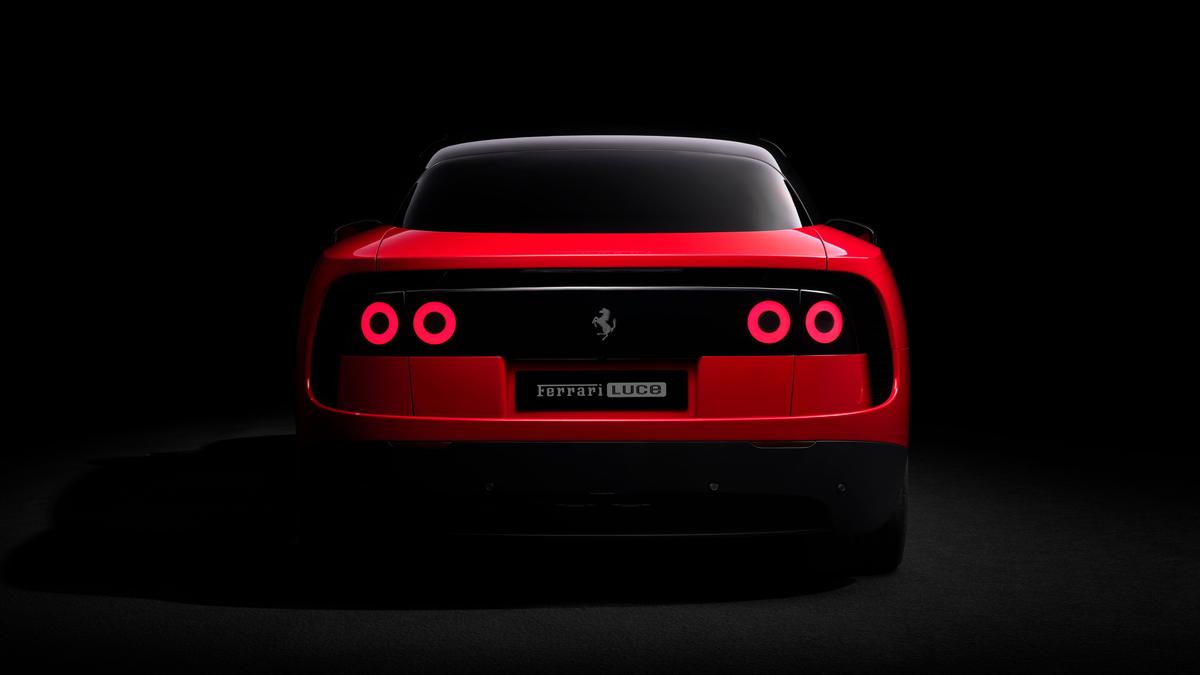
More than just Ferrari’s first EV, the Luce represents a bold attempt to redefine performance luxury for a new generation of buyers
| Photo Credit:
Special Arrangement
More importantly, Ferrari has attempted to preserve a sense of emotional interaction despite the absence of an internal combustion engine. To achieve this, the company has developed entirely new torque management systems that allow drivers to progressively modulate acceleration and regenerative braking through steering wheel-mounted paddles. Rather than delivering the sudden, overwhelming shove common in many EVs, Ferrari says the Luce has been engineered to feel progressive and layered in its responses.
The car also introduces Ferrari’s first fully electric all-wheel-drive system, advanced torque vectoring, active suspension and four-wheel steering. Ferrari claims the technology allows the Luce to disguise its substantial 2,260-kilogram kerb weight with handling characteristics comparable to a much lighter sports car. On a purely technical level, the Luce is undeniably extraordinary.
A cabin that feels like the future
If the exterior has divided opinion, the interior is likely to earn far more universal praise. Ferrari has created what is arguably the most sophisticated cabin in the company history. The Luce blends physical aluminium switches, OLED displays and premium materials into an environment that feels futuristic without becoming overwhelmingly digital. The steering wheel remains central to the driving experience, integrating tactile controls alongside torque-management paddles and Ferrari’s signature Manettino drive mode selector. Ferrari has wisely retained physical interfaces for key functions, avoiding the frustrating overdependence on touchscreens seen in many modern luxury EVs.
Ferrari has developed a unique sound philosophy for the Luce, amplifying authentic drive train vibrations to enhance driver engagement
| Photo Credit:
Special Arrangement
Attention to detail is extraordinary throughout. The displays were developed alongside Samsung, while Corning Gorilla Glass has been integrated extensively across the cabin. Even the key incorporates E Ink technology, allowing its appearance to change when docked into the centre console. A bespoke 21-speaker, 3000-watt audio system has also been developed specifically for the Luce, complimented by massage seats, advanced climate systems and generous passenger space for five occupants. In many ways, the cabin showcases Ferrari at its most thoughtful and innovative. It feels genuinely premium, carefully engineered and remarkably cohesive. It also feels unlike any Ferrari interior before it.
Can an electric Ferrari still feel like a Ferrari?
This is ultimately the question that surrounds the Luce. Ferrari understands that the greatest challenge facing electric performance cars is not speed, but emotion. Instant torque is easy to achieve. Creating genuine engagement is far more difficult.
To address this, Ferrari has developed what it described as an “authentic” sound philosophy. Rather than relying on artificially synthesised noises, the Luce amplifies the genuine mechanical sounds and vibrations generated by the electric motors and drive train. Sensors capture the vibrations travelling through the axles and transmit them into the cabin in real time, creating a soundscape that evolves naturally with speed and load. It is an intelligent and technically fascinating approach. Whether it can genuinely replace the emotional theatre of a Ferrari V8 or V12 remains another matter entirely.
For many enthusiasts, Ferrari has always been about more than performance figures. The sound, vibration, aggression and mechanical drama are integral to the experience. The Luce, despite all its technological brilliance, inevitably distances itself from much of that traditional character. And that is where the backlash truly comes from.
Ferrari’s biggest gamble yet
The negativity surrounding the Luce is not simply a reaction to electrification. Ferrari customers have already embraced hybrid technology through models such as the SF90 Stradale. What makes the Luce controversial is the sense that Ferrari is redefining its identity altogether.
This feels less like an electrified Ferrari and more like Ferrari entering an entirely new luxury category — one shaped as much by technology, design minimalism and sustainability as by motor sport heritage. Perhaps that is intentional. The Luce appears aimed at attracting a different kind of buyer: customers who value innovation, futuristic design and cutting-edge technology alongside outright performance. Buyers who may never previously have considered owning a Ferrari. The risk, however, is clear.
In attempting to broaden its future audience, Ferrari risks alienating many of the loyal enthusiasts who helped build the mythology of the brand in the first place.
Still, Ferrari has rarely succeeded by playing it safe. Throughout its history, the company has repeatedly challenged expectations, often facing criticism before eventually reshaping the industry around it. The Luce may simply represent the next phase of that philosophy — a car designed not to preserve tradition, but to challenge it entirely. Whether this gamble pays off remains impossible to predict. Over time, the design may become accepted, the technology may prove revolutionary and the Luce may ultimately establish itself as a landmark moment in Ferrari’s history.
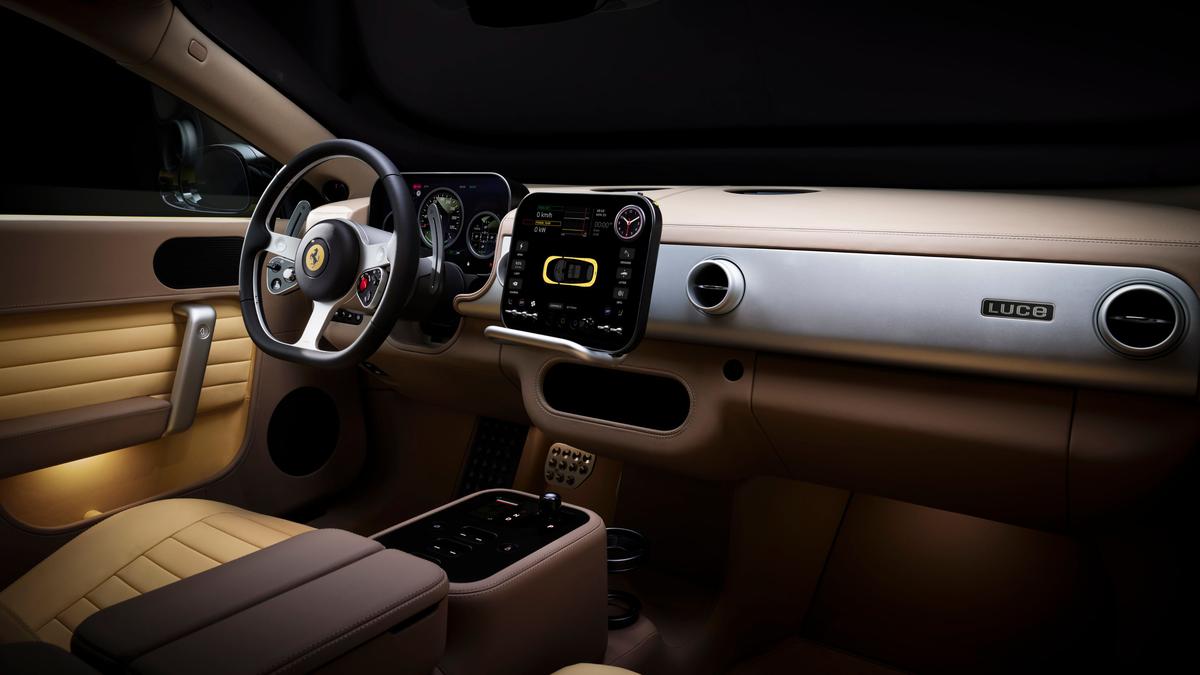
Inside, the Luce combines premium materials, OLED displays and tactile controls to create Ferrari’s most technologically advanced cabin yet
| Photo Credit:
Special Arrangement
Or perhaps enthusiasts will continue asking the same question that emerged the moment the covers came off in Rome— at what will undoubtedly be an eye-watering price, are buyers still better off choosing a proper petrol-blooded Ferrari instead?
Ferrari is expected to price the Luce at approximately €500,000 before options, which would place it well beyond ₹5 crore in India before taxes and customisation.
Motorscribes, in association with The Hindu, brings you the latest in cars and bikes. Follow them on Instagram